
UK Chat Lobby vs Other Rooms — What Actually Works
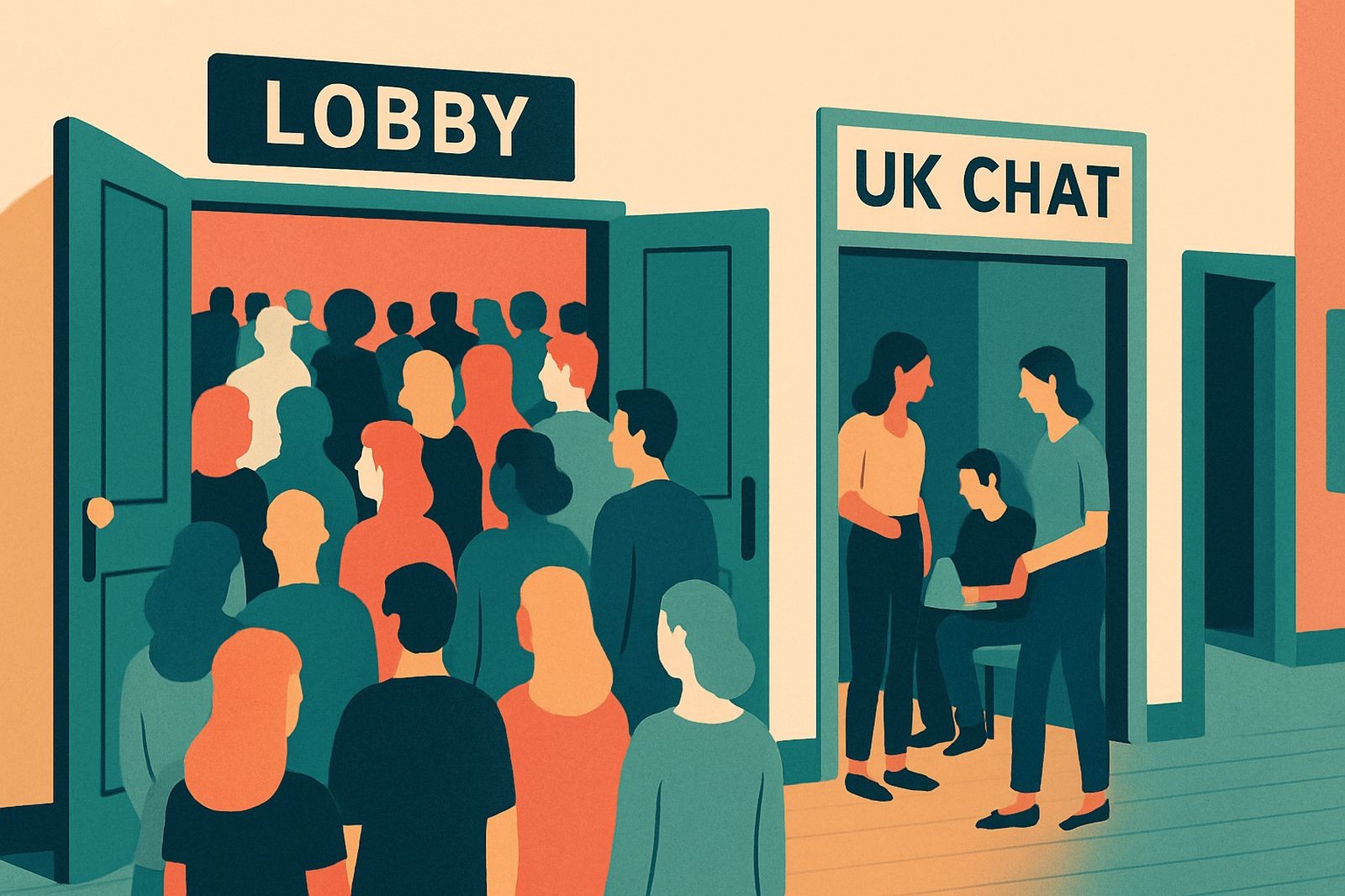
Everyone tells you the Lobby is where to start. That's half-true and half-terrible advice. The Lobby is the biggest room on UKChat — regularly around 89 users at peak — and that volume creates problems nobody warns you about. Smaller rooms, the forum, even user-created spaces all work differently, and which one suits you depends on what kind of conversation you're actually after. Here's how they compare, and how to fix the things that go wrong in each.
The Lobby: High Traffic, High Noise
The Lobby is UKChat's main welcome room. No registration needed — you pick a nickname, click in, and you're live. That zero-barrier entry is genuinely useful if you want to test the water without handing over an email address. But it also means the room fills with people who pop in for thirty seconds, say nothing, and leave. At any given time, a chunk of those 80-odd users are lurkers or drive-bys.
The practical problem: conversations scroll fast. If three or four regulars are mid-flow, your "hi everyone" vanishes in seconds. This is where most new chatters decide the site is dead or hostile — it's neither, but the Lobby doesn't hold your hand. You'll often see the same core group dominating the chat, which can feel cliquey. It isn't always intentional; they're just people who've been chatting together for months or years and have their own shorthand.
What works: jump into an existing thread rather than opening with a generic greeting. If someone's talking about last night's football or complaining about the weather (it's a UK chat room, so this happens hourly), respond directly to them by name. The chat supports this — just type their nickname. You'll get a response far more often than if you broadcast "anyone want to chat?" into a room of ninety people. If you're looking for uk free chat that doesn't require signing up for anything, the Lobby is genuinely the fastest route in.
Smaller Rooms: Less Noise, Different Problems
UKChat runs regional rooms — Scotland, Wales, Northern Ireland — plus interest and age-based rooms like the Cafe, LGBT, and age-bracket spaces. These typically have single-digit user counts. Four people in Scotland, maybe one in the Cafe on a quiet afternoon.
The advantage is obvious: fewer people means you can actually hold a conversation without it getting buried. The disadvantage is equally obvious: fewer people means you might sit there alone for twenty minutes. This is the rough edge nobody mentions. You join the Wales room expecting a chat, and it's you and one other person who's been idle for half an hour. That's not a bug — it's just what low-traffic rooms look like outside of evening hours.
The fix is timing. UK chat rooms peak between roughly 7pm and 11pm GMT on weekdays, later on weekends. Joining the Scotland room at 2pm on a Tuesday is a coin flip. Joining at 9pm on a Friday gives you much better odds. The lesbian chat room and the LGBT room follow similar patterns — they're most active in the evening when people are home and looking for conversation rather than killing time at work.
Smaller rooms also tend to develop tighter communities faster. If you show up three evenings in a row, people will start recognising your name. That's harder to achieve in the Lobby where you're one of ninety.
The Forum: Slower but Stickier
UKChat's forum runs on XenForo and covers everything from general discussion and debates to memes, music, and word games. Unlike the chat rooms, the forum requires registration to post — though you can browse without it.
The trade-off here is speed versus depth. Chat rooms are real-time and ephemeral; your message is gone in minutes. Forum threads stick around. If you post a question in General Discussion or start a debate in Current Events, people can respond hours or days later. For anyone who finds live chat rooms stressful — too fast, too much pressure to be witty on the spot — the forum is a better fit.
The friction point: the forum can feel quiet compared to the chat. Some threads get solid engagement; others sit with one reply for a week. That's normal for community forums in 2025, but it catches people off guard if they're expecting the same energy as the Lobby. The Introductions section is genuinely worth using — regulars do read it, and it's one of the few places where saying "hi, I'm new" actually gets a warm response.
One thing the forum does that chat can't: it lets you build a posting history. Over time, people associate your username with your contributions. That reputation carries over if you then show up in the chat rooms. Forum regulars who pop into the Lobby tend to get recognised and pulled into conversations faster than complete unknowns. If you're looking for london chat, it's a good place to start.
User-Created Rooms: Freedom with a Catch
Anyone can create their own chat room on UKChat. This sounds great until you realise the catch: user-created rooms are not moderated by staff. The official rooms — Lobby, regional rooms, LGBT — have volunteer and staff moderation. User-created rooms don't. You're on your own.
This means the quality varies wildly. Some user rooms are perfectly fine — a group of mates who wanted a private space. Others attract spam, nonsense, or people who got kicked from the official rooms and want somewhere without rules. If someone invites you to a user-created room within your first five minutes of chatting, be sceptical. That's a common pattern: someone messages you privately, suggests moving to "their" room, and the conversation goes sideways fast.
The practical rule: stick to official rooms until you know the community well enough to judge which user rooms are worth entering. The london chat room and other regional spaces give you the smaller-room experience with actual moderation backing it up.
Pick What Fits — Not What's Biggest
If you want fast, anonymous, no-commitment chatting and you can handle the scroll speed: the Lobby works, especially during evening hours. Respond to specific people, not the room at large.
If you want actual back-and-forth conversations where you can finish a thought: smaller regional or interest rooms between 7pm and 11pm. Accept that some nights will be quiet.
If you prefer thinking before you type and building a presence over time: the forum. Register, introduce yourself, and contribute to threads that interest you. It compounds.
If you're tempted by user-created rooms: wait until you've spent enough time in official spaces to recognise the regulars. UKChat has been running since 1997 and the community has a long memory — the people worth talking to are mostly in the moderated spaces already.